
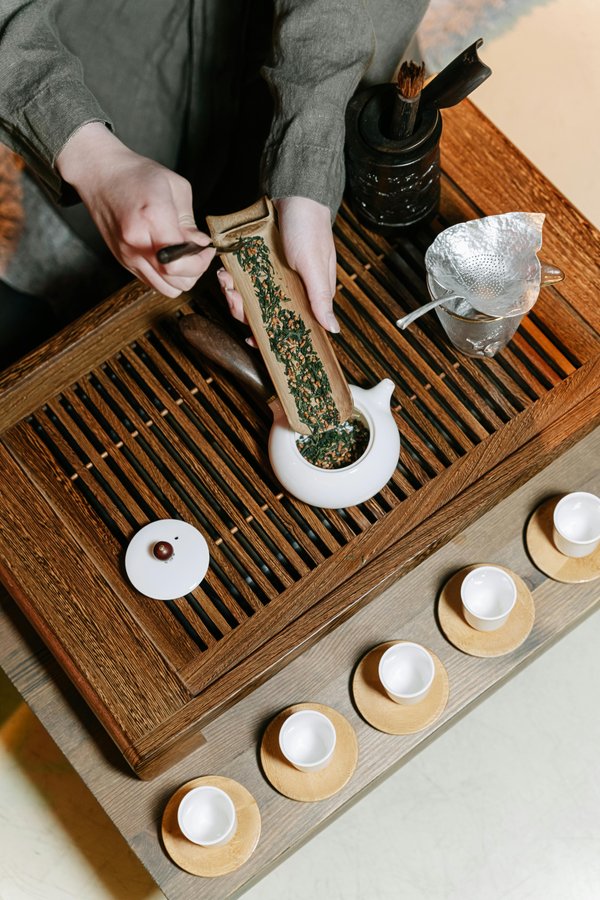
Japanese Tea Culture
Japan
Four blends rooted in the landscapes, seasons, and tea traditions of Japan — from the cherry blossom of spring to the hearth of winter.
Provenance
Japan produces some of the most meticulously grown tea in the world — the green teas of Shizuoka, the shade-grown gyokuro of Uji, the roasted houjicha of Kyoto. All base teas in this collection are sourced from small Japanese producers committed to traditional cultivation and hand-finishing methods. The yuzu peel comes from Kochi Prefecture, Japan's primary yuzu-growing region. The sakura blossoms are salt-preserved in the traditional Japanese manner, sourced from producers in Niigata. This is not a collection that approximates Japan — it is drawn directly from it.
Satoyama
Village Mountain Spring
Satoyama — the landscape between mountain and flat — is where wild Japan and cultivated Japan meet. This is the territory of cherry blossoms, morning mist, and tea gardens carved into hillsides. Green tea meets salt-preserved sakura and the complex citrus of yuzu peel. Ephemeral. Luminous. A cup that tastes like a Japanese spring.
Botanicals
Green Tea · Sakura · Yuzu · Lemon Verbena
Brewer's Note
Never boiling — 175°F preserves the green tea's sweetness and the yuzu's bright perfume. Rinse the sakura blossom in cold water first to remove excess salt.
Shinrin-yoku
Forest Bathing
Shinrin-yoku — the Japanese practice of walking slowly through forest — is associated with measurable effects on the nervous system: lowered cortisol, deeper breathing, quieter mind. This blend attempts to evoke that quality in a cup. Green tea, spearmint, lemon verbena, and elderflower — clean, green, alive with the character of growing things.
Botanicals
Green Tea · Spearmint · Lemon Verbena · Elderflower
Brewer's Note
Keep to lower temperature — 175°F — and steep briefly. The elderflower is delicate and needs gentle handling.
Irori
The Hearth
The irori — the sunken hearth at the centre of a traditional Japanese farmhouse — is where family gathered, food was cooked, and tea was always warming. Houjicha, roasted over charcoal, carries that same warmth. Here it meets ginger's quiet fire, cardamom's aromatic lift, and a note of cinnamon. An evening cup. Grounding and entirely unhurried.
Botanicals
Houjicha · Ginger · Cardamom · Cinnamon
Brewer's Note
Houjicha takes full boiling water and a short steep. The roasted character carries the spice beautifully without any bitterness.
Shizuoka
The Tea Region
Shizuoka Prefecture produces roughly forty percent of Japan's tea — its volcanic soils and misty mountain climate producing greens of exceptional clarity and depth. This blend honours the region with a straight green tea base, heightened by yuzu peel and a note of ginger. Clean, focused, and quietly complex. The taste of Japan's most important tea landscape.
Botanicals
Green Tea · Yuzu · Ginger · Lemon Verbena
Brewer's Note
Add the yuzu peel in the final minute of steeping to preserve its bright volatile oils. A restrained and elegant cup.